
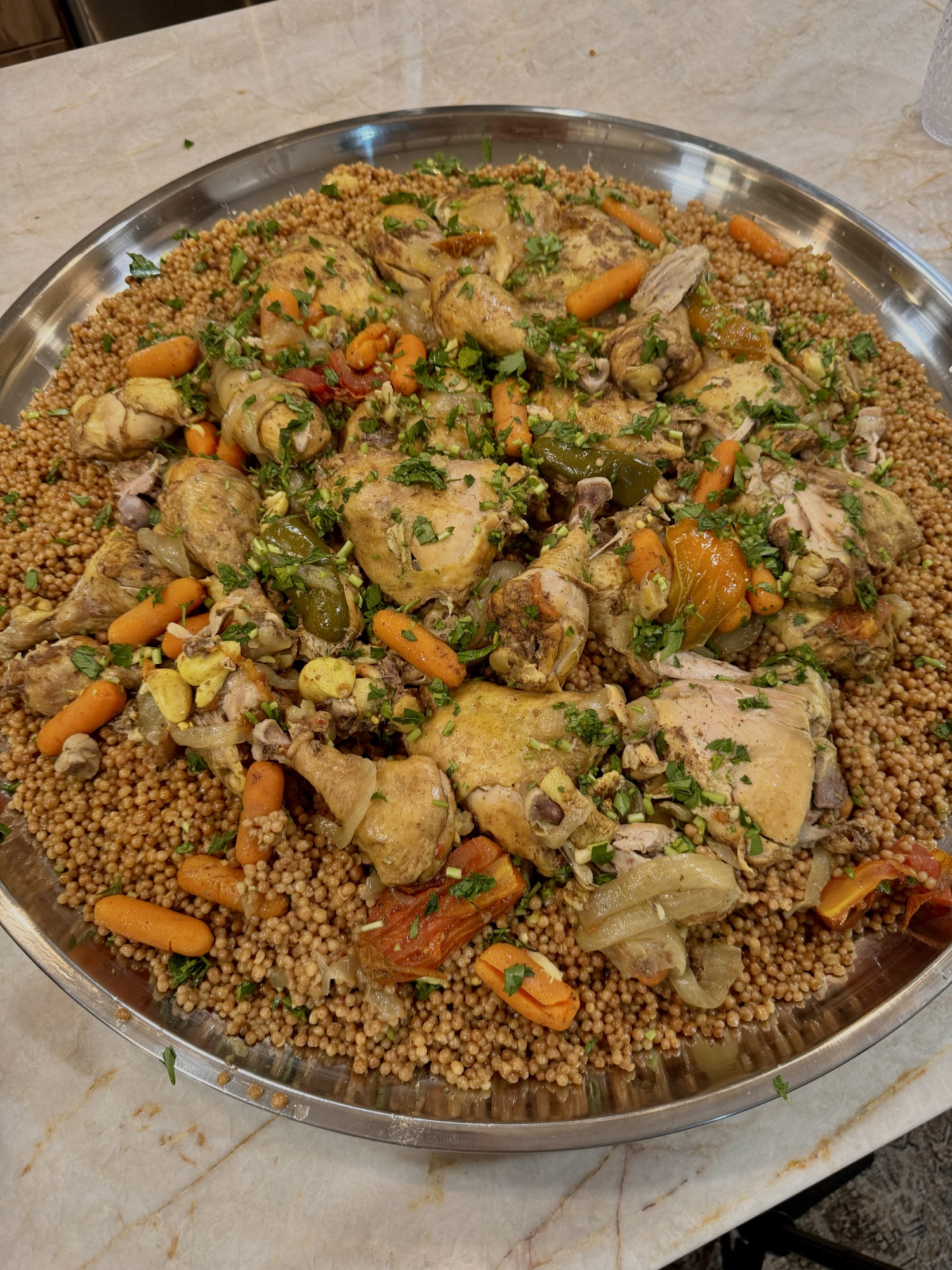
When it comes to Middle Eastern cuisine, few dishes are as comforting and satisfying as Maftoul. Often referred to as Palestinian or Lebanese couscous, Maftoul is a traditional dish with deep roots in the Levant region. It’s a culinary gem that deserves a place on your dining table, not just for its hearty and delicious taste, but for the rich cultural heritage it represents.
What is Maftoul?
Maftoul, sometimes known as “pearl couscous,” is a staple in many Middle Eastern households. It is made from bulgur (cracked wheat) and whole wheat flour, which are combined and rolled into tiny, round granules. These granules are then sun-dried or steamed, giving them a chewy texture and a nutty flavor that distinguishes Maftoul from other types of couscous.
Unlike traditional couscous, which is made from semolina and is much smaller in size, Maftoul has a larger, more substantial bite. This makes it an excellent base for absorbing the flavors of the broths, sauces, and spices that often accompany it.
The Origins of Maftoul
The origins of Maftoul can be traced back to ancient Palestine, where it has been a beloved dish for generations. The name “Maftoul” itself comes from the Arabic word “faṭala,” meaning “to roll or to shape by hand.” This reflects the traditional, labor-intensive process of making Maftoul by hand—a skill passed down through generations of women in the region.
Historically, Maftoul was made during the wheat harvest season when families would gather to celebrate and prepare large quantities for the year ahead. Today, while the process has been modernized, many still cherish the traditional methods, making Maftoul a dish that connects the past with the present.
How to Cook Maftoul
Cooking Maftoul is a straightforward process, but it requires some patience to get it just right. Here’s a simple guide to preparing this delicious dish:
Cooking the Chicken

When making maftoul, always start with the chicken so you have a flavorful and rich broth to cook the maftoul with.
Add bone in skin on chicken to a pot-you can use whatever cuts you like, such as legs, thighs, a combination, or even a whole chicken. Add thickly sliced onions, quartered Roma tomatoes, whole garlic cloves, and largely chopped carrots. Next cover everything in water or broth and add in all the spices: salt, black pepper, turmeric, cumin, cinnamon, allspice, cinnamon, and chicken stock cubes.
Give everything a good mix, and bring it to a boil on high heat. Spoon or strain off any foam that rises to the top . Then turn the heat down to low, cover, and let it simmer gently for several hours or until the chicken and carrots are completely tender-mine went about four hours.
Optional:
I always add halved jalapeños to my chicken. This is absolutely not traditional, but I believe the slight kick of spice really elevates the dish-but that’s my own palate!
Cooking the Maftoul

Once the chicken, veggies, and stock is ready—it’s time to get started on the maftoul. It can usually be found in middle eastern markets.
Heat a heavy bottom pot on medium and melt some butter. Add the maftoul and mix constantly to toast them.
Then strain the liquid from the chicken and add the same amount of stock to maftoul. So if you’re cooking two cups of maftoul, add two cups of stock. Some recipes may call for a different amount, so be sure to check the maftoul packet!
Add a can of chickpeas and bring it to a boil. Then turn the heat down to low, cover and simmer gently for 15 minutes. Uncover maftoul and fluff before serving.
Maftoul is best served on a large platter for everyone to share! First layer on the maftoul. Then place the chicken and veggies on top. Garnish with chopped parsley and serve with lots of broth. Enjoy!

Ingredients
- 4 pounds chicken, bone in skin on. Either a whole chicken or chicken legs and thighs
- 1 tbsp salt or to taste
- 1 tbsp black pepper
- 1 tsp each turmeric , cumin, cinnamon, allspice, and chicken stock cube
- 1 large onion, cut in thick slices
- 3 large peeled and chopped carrots
- 3 Roma tomatoes, quartered
- Water to cover
- Optional: 2 halves jalapeños
For the Maftoul
- 1 stick butter
- 2 cups maftoul
- 2 cups stock (or 4 cups stock depending on brand)
- 1 can garbanzo beans
- Parsley to garnish
Directions
- In a pot on high heat combine all the chicken ingredients and bring to a boil
- Remove and foam that floats to the top. Reduce heat to low and simmer gently for several hours or until the chicken and carrots are completely tender-about four hours
- Strain 2 cups of broth and set aside
- In a separate pot, melt butter and add maftoul. Toast for 3-4 minutes before adding strained stock and garbanzo beans
- Bring to a boil, then turn heat down to low, cover, and simmer gently for 15 minutes
- Serve maftoul topped with chicken, vegetable, lots of broth, and garnished with parsley. Enjoy!
Serving Suggestions
Maftoul is incredibly versatile and can be served in a variety of ways. It pairs beautifully with slow-cooked meats like lamb or chicken, and it can also be enjoyed as a vegetarian main dish with an array of roasted vegetables. Some like to serve it with a dollop of yogurt or a sprinkle of fresh herbs like parsley or cilantro.
In Middle Eastern cuisine, Maftoul is often accompanied by a refreshing salad of cucumbers, tomatoes, and onions dressed in lemon juice and olive oil. The brightness of the salad complements the warm, spiced flavors of the Maftoul perfectly.
Why You Should Try Maftoul
Beyond its delicious taste, Maftoul is a dish steeped in history and tradition. It’s a culinary expression of the Palestinian and Levantine cultures, offering a taste of the Middle East in every bite. Whether you’re looking to explore new flavors, connect with cultural roots, or simply enjoy a wholesome meal, Maftoul is a dish that delivers on all fronts.
Next time you’re planning a meal, consider trying Maftoul. Its unique texture, rich flavors, and cultural significance make it a dish worth savoring and sharing with loved ones.